Your HVAC system works quietly, keeping your home comfortable through everything from sweltering summers to chilly winters. However, when something goes wrong, a stressful question often enters your mind: Should I repair it, or is it time to replace the whole system?
There’s no one-size-fits-all answer, but there are clear signs and factors that can help you make the right call. Understanding when it makes more sense to invest in a repair versus when replacement is the smarter, more cost-effective route can save you time and money. We’ll explore how expert diagnostics, preventative maintenance plans, and financing options can simplify your decision process.
Consider the Age of Your HVAC System
Most HVAC systems have a typical lifespan that ranges between 10 and 15 years. With regular maintenance, some can last even longer than this, although this is rare. Once your unit reaches the 10-year mark, repairs become less practical and increasingly costly over time.
As a typical rule of thumb, if your system is under 10 years old and hasn’t had many issues, repairing issues that arise usually makes the most sense. If your system is between 10 and 15 years old, replacement becomes the more financially sound option, especially as repair needs become more frequent.
Once your HVAC system is 15 years old or more, heating and AC replacement is often the best route to take. This is true even when repair needs are minimal because the efficiency and reliability of your system have likely dropped significantly.
When you invest in a new system, it’s also significantly more efficient than models built even a decade ago. This helps you save money because the new unit will use less energy to keep your home comfortable.
Frequency of Repair Needs
When you need a repair for your cooling system or heater, that doesn’t necessarily mean it’s time to replace your entire system. However, when you need to make multiple service calls in a single season, that could be a red flag indicating it’s time for a replacement.
A good rule of thumb to follow is the “$5,000 Rule.” With this, you multiply the cost of the repair by the age of the system. If the result exceeds $5,000, replacement is usually the better choice.
For example, if your 12-year-old system requires a $500 repair, the total cost is $6,000 (12 × $500). Based on the rule, you’re likely better off replacing the unit than continuing to invest in short-term fixes.
Simply put, spending a lot of money on repairs will wear on your wallet after a bit, so even if it seems like a minor inconvenience, you will save more money upgrading a system that is constantly having issues. Even minor breakdowns can signal broader system wear, especially when you are dealing with components like the compressor, evaporator coil, or blower motor.
Evaluate Energy Efficiency
Rising energy bills are often the first warning sign that indicates your HVAC system isn’t running as efficiently as it used to. As your system ages, it loses its ability to maintain the temperature in your home without drawing more power.
Add in outdated technology or aging ductwork, and your utility bills can climb steadily. This can still be true even if you are using the same amount of energy and your usage habits haven’t changed.
Today’s HVAC systems are far more efficient than those built more than 10 years ago. This is because of the advanced motors, variable-speed compressors, and high SEER (seasonal energy efficiency ratio) ratings.
According to the Department of Energy, replacing a system that is more than 10 years old with a modern ENERGY STAR-certified unit can cut your energy use by up to about 40%. If your monthly energy costs are rising and your system is beginning to show its age, an upgrade can pay for itself quicker than you might expect.
Consider Comfort and Air Quality Issues
If certain rooms seem warmer or cooler than others or if you’re experiencing excess humidity or stale air, it might be more than just dirty filters. As your HVAC system ages, it often struggles to maintain consistent temperatures throughout your living space and regulate indoor humidity levels effectively. This can affect comfort, indoor air quality, and even your health.
Here are signs that your HVAC system may be getting old and is no longer up to the task:
- Requires frequent thermostat adjustments
- Releases excessive dust or unusual odors
- Rising humidity levels and moisture indoors
- Uneven cooling or heating between rooms in your home
Repairing a failing system might restore short-term function, but it won’t necessarily solve deeper comfort or airflow issues. In such cases, replacing the system can significantly improve the indoor environment within your home.
Why Professional Diagnostics Matter
Before making a final decision, it’s worth scheduling a system evaluation with one of our licensed HVAC technicians at Greiner Heating and Air. An assessment can help identify the cause of the performance issues your system is experiencing. Once we identify the issue, we can provide a clear breakdown of the pros and cons of repairing versus replacing.
During a diagnostic visit, our technician will:
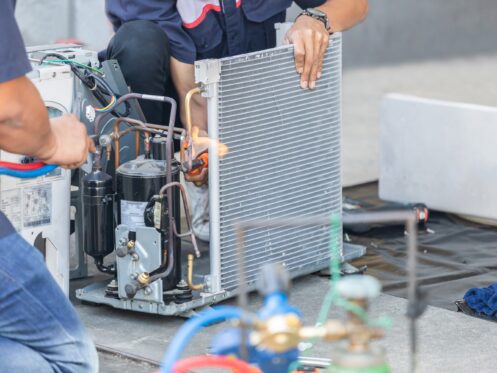
- Inspect the compressor, blower motor, coils, and refrigerant lines
- Test system airflow and temperature differentials
- Evaluate system age, condition, and energy usage
- Check for leaks, wear, or outdated components
- Provide a repair estimate and compare replacement options
This gives you the information needed to make a confident decision, based not just on the current problem that needs attention but on the complete picture of your HVAC system’s health.
Consider a Maintenance Value Plan
Regular maintenance is one of the best ways to avoid the repair or replacement dilemma in the first place. We offer a Maintenance Value Plan at Greiner Heating and Air that provides you with regular tune-ups and priority service throughout the year.
This helps you identify problems early before they become costly repairs. By being proactive, you reduce breakdowns and postpone the need for a full system replacement.
Financing Is an Affordable Option
One of the reasons that you might hesitate to replace your system is the cost. However, putting off the replacement of your HVAC system leads to a more expensive decision in the long run.
At Greiner Heating and Air, we offer financing options on approved credit that make upgrading your HVAC system more affordable. Pair that with rebates and energy efficiency incentives, and we can significantly reduce the cost of a new HVAC system.
Contact Our Reliable HVAC Company for a Consultation
Know when to repair or replace your heating and cooling system. Do this by examining indicators, such as system age, repair frequency, energy bills, and performance, and you’ll know where your system’s health stands.
Still not sure what to do? That’s where our expert HVAC diagnostics and support team comes in. Contact us at Greiner Heating and Air in Dixon, CA, so that we can help you weigh the short-term costs against the long-term benefits and offer a plan that suits your home and budget.
