
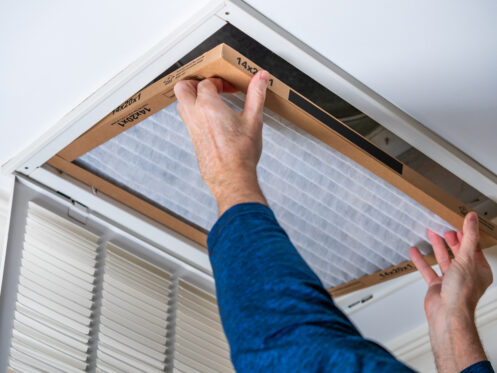
One of the most important steps in maintaining an HVAC system is regularly changing the air filter. The filter keeps dust, hair, and other airborne particles from entering the system’s internal components. Without it, parts like the blower motor and evaporator coil would quickly become clogged, which can lead to reduced performance, breakdowns, and premature system failure. Even waiting too long between filter changes can create serious issues with efficiency, comfort, and long-term equipment lifespan.
How a Dirty Filter Affects an HVAC System
Air filters are designed to trap dust and debris, but they can only hold so much. As the filter fills up, airflow becomes restricted. When the blower cannot pull in enough air, the system struggles to heat or cool effectively. This forces the HVAC system to run longer cycles to reach the desired temperature, increasing energy consumption and reducing efficiency.
Running your system with a clogged filter also increases wear and tear. Restricted airflow puts extra strain on the blower motor and, in cooling mode, on the AC or heat pump compressor. These components can overheat and shut down unexpectedly as a safety measure. Over time, the added stress can shorten their lifespan. A failed compressor, in particular, is a costly repair that often makes replacing the entire AC unit more economical.
Dirty filters also pose significant risks for furnaces. A furnace depends on proper airflow to keep temperatures at safe operating levels. Without enough cool air moving across the heat exchanger, the furnace can overheat. Although safety switches are designed to shut the system down in this situation, repeated overheating can damage wiring, internal components, and the heat exchanger itself. A cracked heat exchanger is extremely dangerous, as it can allow carbon monoxide to enter the home through the ductwork.
How Often Should You Change an HVAC Air Filter?
The general recommendation is to change your HVAC air filter at least every 90 days. If you use a washable filter, make sure you clean it regularly according to the manufacturer’s instructions.
However, many factors can shorten this timeline. During California’s hot summers, air conditioners often run for long hours each day, which can cause filters to clog in one to two months. Homes with multiple pets may also see filters fill more quickly due to hair and dander. Dusty environments, indoor smoking, and smoke from nearby wildfires can all cause filters to become dirty much faster than usual. Older homes with air leaks around windows or doors can bring in more outdoor particles, too.
The filter’s efficiency rating also affects how often it needs to be changed. The MERV scale measures how well a filter captures both large and small particles. Most disposable pleated filters used in homes fall between MERV 6 and MERV 12. Higher ratings capture more particles but may clog faster because they trap more debris.
Filters with lower MERV ratings primarily catch larger dust particles and hair. Higher-rated filters capture more dust, pollen, pet dander, and mold spores. Because they collect finer particles, high-MERV filters may need to be checked more frequently. If you use a MERV 10 or higher, it’s often best to replace it every six to eight weeks.
How to Know What Air Filter to Use
Choosing the right air filter is essential for efficiency and equipment protection. In most homes, a MERV 6 or higher is recommended. Filters under MERV 6, such as basic fiberglass options, do not provide enough filtration to keep dust and debris from accumulating inside the system.
However, going too high in MERV rating can also cause problems. High-efficiency filters are denser, which means the blower may struggle to pull air through them. If the filter is too restrictive for your system, the result is similar to running the HVAC with a dirty filter: reduced airflow, higher energy use, and added strain on components.
Newer HVAC systems are often designed to handle MERV 10 or even MERV 12 filters without issues. Older or smaller systems may struggle with anything above MERV 8. If you’re unsure which filter rating is safe for your equipment, it’s best to ask a professional during your next maintenance visit.
You’ll also need to decide between disposable pleated filters and washable reusable filters. A high-quality reusable filter can last five to ten years and may save money over time. However, it must be cleaned every one to three months and completely dried before being reinstalled. This means your HVAC system will need to remain off during the drying period unless you have a spare filter. You should never run your system without a filter, as dust and debris will collect on internal components.
Greiner Heating and Air is a local, family-owned and operated company providing reliable residential HVAC services. We’ve proudly served the Yolo and Solano County areas for more than 30 years. Our skilled technicians are ready to help with cooling, heating, and indoor air quality services. Contact us today to schedule an appointment.