
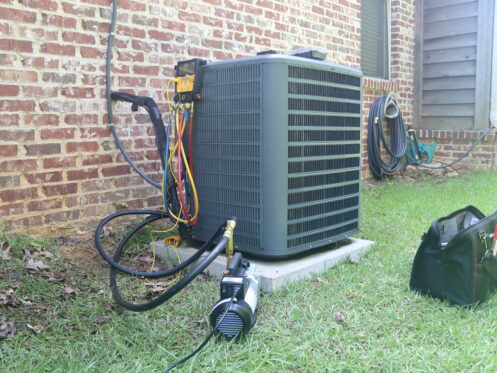
If your existing cooling system is more than a few years old, there’s a pretty good chance it relies on an outdated refrigerant. The refrigerant inside your air conditioning system plays a huge role in the operating efficiency of your system, repair costs, and its overall long-term sustainability. Understanding how new environmental regulations impact the use of older refrigerants can help you make better-informed decisions about your unit.
What Does Refrigerant Do?
Refrigerant is technically a chemical compound that your cooling system uses to remove heat from inside your home. It cycles throughout your system by absorbing heat inside and transferring it to the air outside. This process allows it to effectively cool your home throughout the entire summer season.
Old R-22 Freon
You may hear homeowners occasionally refer to refrigerant as Freon. It’s important to note that Freon is actually a brand name that’s given to a common type of refrigerant known as R22. While this was a standard refrigerant for air conditioning systems for many years, it has now been banned from use.
R22 contains hydrochlorofluorocarbons, or HCFCs for short. This has been shown to deplete the ozone layer of the Earth, causing a significant environmental impact. The production and importation of R22 refrigerant were officially banned in 2020. While it’s still possible to reclaim or recycle R22 refrigerant from outdated systems, there’s a very limited supply of it.
If your existing cooling system uses R22 refrigerant, it can be exceedingly expensive to recharge its refrigerant. R22 refrigerant was commonly used in residential cooling systems produced before 2015.
R-410A Refrigerant
Many cooling systems produced after 2015 started using R410A refrigerant. This was the standard replacement for the outdated R22 Freon. Originally, this type of refrigerant was thought not to deplete the ozone layer and to allow your system to run more efficiently. Because it operates at a higher pressure, older systems that use R22 cannot be converted to use R410A.
After decades of research, R410A has been shown to have a negative impact on the environment. For this reason, it’s gradually being phased out of the cooling industry. Newer refrigerants with lower global warming potential are becoming the standard. Some popular newer refrigerants with low global warming potential include R32 and R454B. As of 2026, all new air conditioning systems must use one of these newer refrigerant types.
Why Do Phase-Outs Matter?
When you first hear that refrigerants like R22 and R410A are being phased out, you may wonder if you can still run your air conditioning system if it has one of these older refrigerants. The simple answer is that yes, you can still use your original air conditioning equipment if it uses one of these outdated refrigerants.
The phase-out ban in place simply restricts the manufacturing of new systems with these outdated refrigerants. You won’t be able to purchase a new unit that uses R22 or R410A refrigerant moving forward. These phase-outs still affect homeowners in several different ways.
Here are key ways these phase-outs can impact you.
- Higher repair costs
- Refrigerant leaks are bigger issues
- Limited compatibility for older systems
- Higher replacement system cost
Systems that use one of these outdated refrigerants will be costlier to repair for several different reasons. One of the first is that getting access to R22 or R410A refrigerant will get harder as the years go by. Thanks to the role of supply and demand, as demand increases and supplies decrease, the price goes up. This means you can spend a significant amount of money on just recharging your system after a refrigerant leak.
Another reason repair costs will increase is that modern systems have different components that are specifically designed for newer refrigerants. This means getting access to replacement parts for systems with outdated refrigerants will be more challenging. This will also increase the price of available parts, making them more expensive for homeowners.
Can You Convert Older Units?
A common question that a lot of homeowners who have outdated units have is whether they can simply convert them to use one of the newer refrigerants. The simple answer to this question is that it’s not possible. Newer refrigerants work differently from older refrigerants. This required a complete redesign of home air conditioning systems to adapt to using these lower GWP refrigerants. This means you’ll have to purchase a brand-new air conditioning system to use one of the newer refrigerants.
Does Upgrading Now Make Sense?
Just because your cooling system uses an outdated refrigerant doesn’t mean that you automatically have to upgrade to a new unit. In fact, many homeowners continue to use their aging system until it experiences major problems. As a homeowner, there are a couple of things you’ll want to take into account when making your ultimate decision of whether to upgrade.
Here are key signs you should upgrade.
- System over 10 years old
- Have a refrigerant leak
- Decreased cooling performance
- Need frequent repairs
- Repair costs exceed one-half replacement cost
If your existing air conditioning system is getting up there in age, it’s best to plan a replacement before it completely fails. You never want to be stuck in the hot summer season without a well-functioning air conditioning system. By scheduling a replacement before your system breaks down, you can have the peace of mind that your family will remain comfortable. Scheduling ahead of time also ensures that you can find convenient financing.
The Many Benefits of Upgrading Your AC Unit
As with any purchasing decision for your home, it’s important to weigh both the pros and cons of purchasing a new unit. One of the biggest benefits of upgrading your air conditioning system is that it will use one of the newer refrigerants. You won’t have to worry about whether there is an adequate refrigerant supply or exceedingly costly repair bills.
Newer systems are significantly more efficient than outdated models. This translates to lower energy bills for you and enhanced indoor comfort. Repairs will be easier for newer units because there are parts that are readily available. Additionally, your new system will come with a brand-new warranty, so you won’t have to pay out of pocket for any defective components.
Purchasing a new air conditioning system ensures your home has a lower environmental impact, which can go a long way in giving you peace of mind. Newer units are specifically designed to provide more consistent cooling and humidity control, which will enhance your comfort.
Be Proactive With an Inspection
When you first learn about these different types of refrigerants and their restrictions, you may be wondering what type of refrigerant your system uses. A great way to figure this out is to schedule an inspection with one of our HVAC technicians. We can inspect your unit, determine if it has any leaks, and provide you with the type of refrigerant it uses. This can give you the necessary information you need to plan ahead instead of dealing with an emergency breakdown during a summer heatwave.
Reliable AC Replacement Service
Greiner Heating and Air offers reliable AC replacement service in Dixon, CA. We can also assist with all your AC installation, repair, and tune-up needs. Simply call us today to schedule your next service appointment with one of our skillful HVAC technicians.